How to single crochet for beginners
Single crochet is one of the most important stitches every crocheter should learn. It’s simple, sturdy, and easy to remember, making it a great starting point for beginners.
The single crochet stitch creates a tight, even fabric that works well for many crochet projects. Once you learn how to single crochet, you can use it to make blankets, hats, bags, washcloths, and even stuffed animals.
In this tutorial, you’ll learn how to single crochet step by step, plus helpful tips that make the stitch easier to understand and practice.
Quick answer: how to single crochet
To make a single crochet stitch, insert your hook into the next stitch, yarn over, pull up a loop, yarn over again, and pull through both loops on the hook.
What is a single crochet stitch?
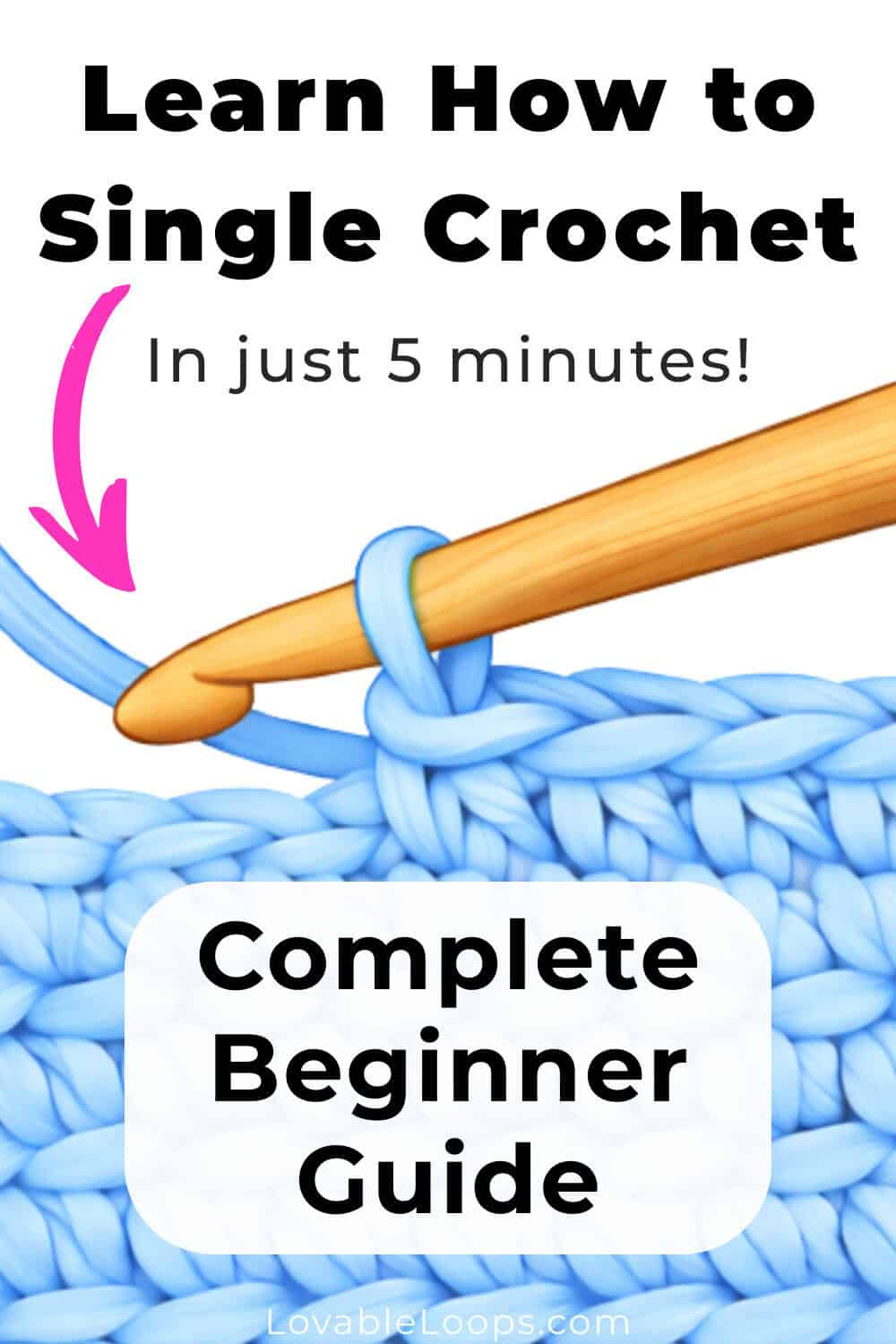
The single crochet stitch is one of the most basic stitches in crochet. It is short and compact, which creates a firm and sturdy fabric.
Because the stitch is shorter than taller stitches like half double crochet or double crochet, it produces a dense texture that holds its shape well. This makes single crochet a popular choice for projects that need structure or durability.
If you’re planning to make a hat, it helps to understand how sizing works. My crochet hat sizing guide explains how to measure head circumference and choose the right hat size for babies, kids, and adults.
What is single crochet used for?
Single crochet is used in many crochet patterns because it creates a smooth, tight fabric.
Common projects that use single crochet include:
- crochet blankets
- washcloths and dishcloths
- crochet hats
- crochet bags
- amigurumi (crochet stuffed animals)
- baskets
- borders and edging
It is especially useful when a project needs:
- a firm structure
- a tight stitch pattern
- a neat, simple texture
- less stretch than taller stitches
Single crochet abbreviation
US term: single crochet
US abbreviation: sc
UK term: double crochet
This difference between US and UK crochet terms can be confusing for beginners. Most crochet patterns written in the United States use sc to represent single crochet.
Skill level
Beginner – Single crochet is often the first stitch new crocheters learn after making a chain.
Materials needed
- Yarn – A smooth, light-colored worsted weight (#4) yarn works best for practice because it makes stitches easier to see.
- Crochet hook – Use the hook size recommended on your yarn label. A 5 mm crochet hook is a good starting size for worsted weight yarn.
- Scissors – For trimming yarn when finished.
- Yarn needle – Used to weave in yarn ends after completing your project.
How to hold the yarn and hook
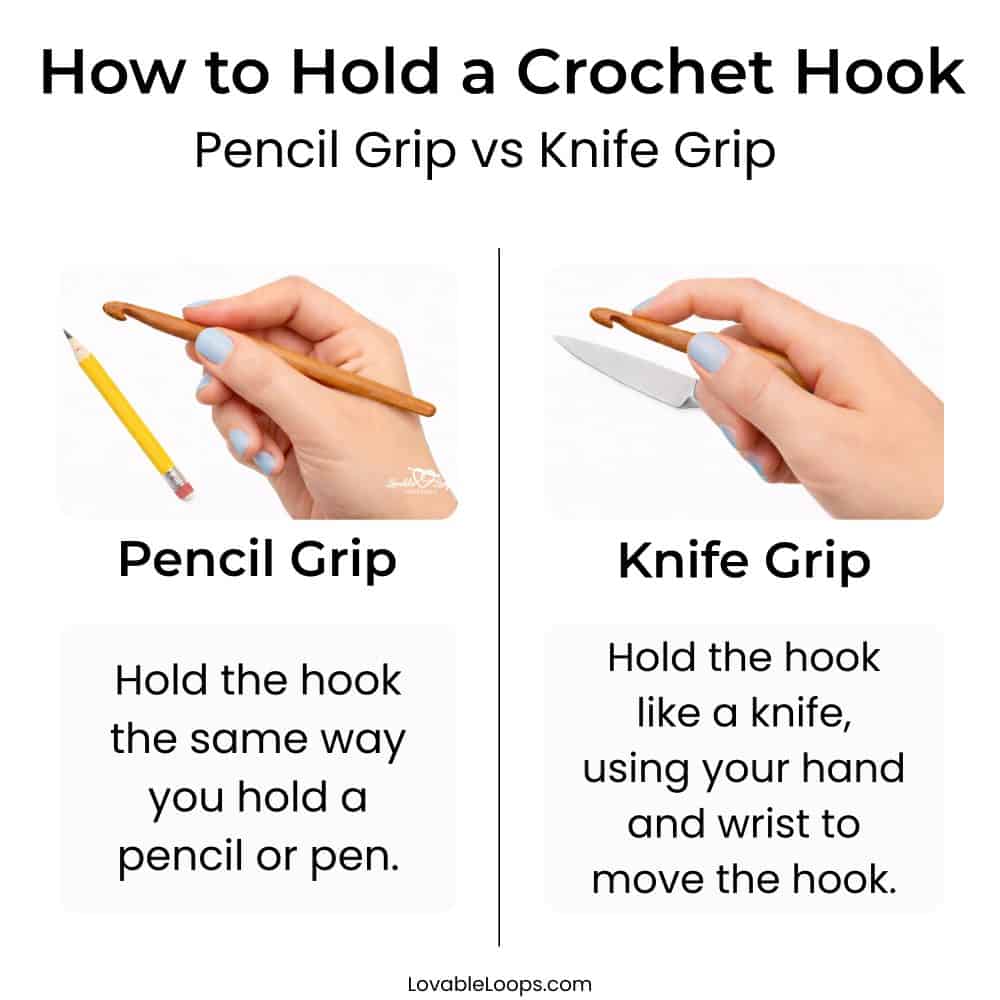
There are different ways to hold a crochet hook, and there is no single correct method. Most crocheters use either the pencil grip or the knife grip.
Hold the yarn with your opposite hand so you can guide the tension while making stitches.
If it feels awkward at first, don’t worry. Holding the yarn and hook becomes much easier with practice.
How to make a foundation chain
Before you can start making single crochet stitches, you need to create a foundation chain.
- Make a slip knot and place it on your hook.
- Yarn over the hook.
- Pull the yarn through the loop on your hook to create a chain stitch.
- Repeat until you reach the number of chains needed.
Try to keep your chains relaxed so they are easy to work into later.
How to single crochet step by step
Follow these simple steps to make a single crochet stitch.
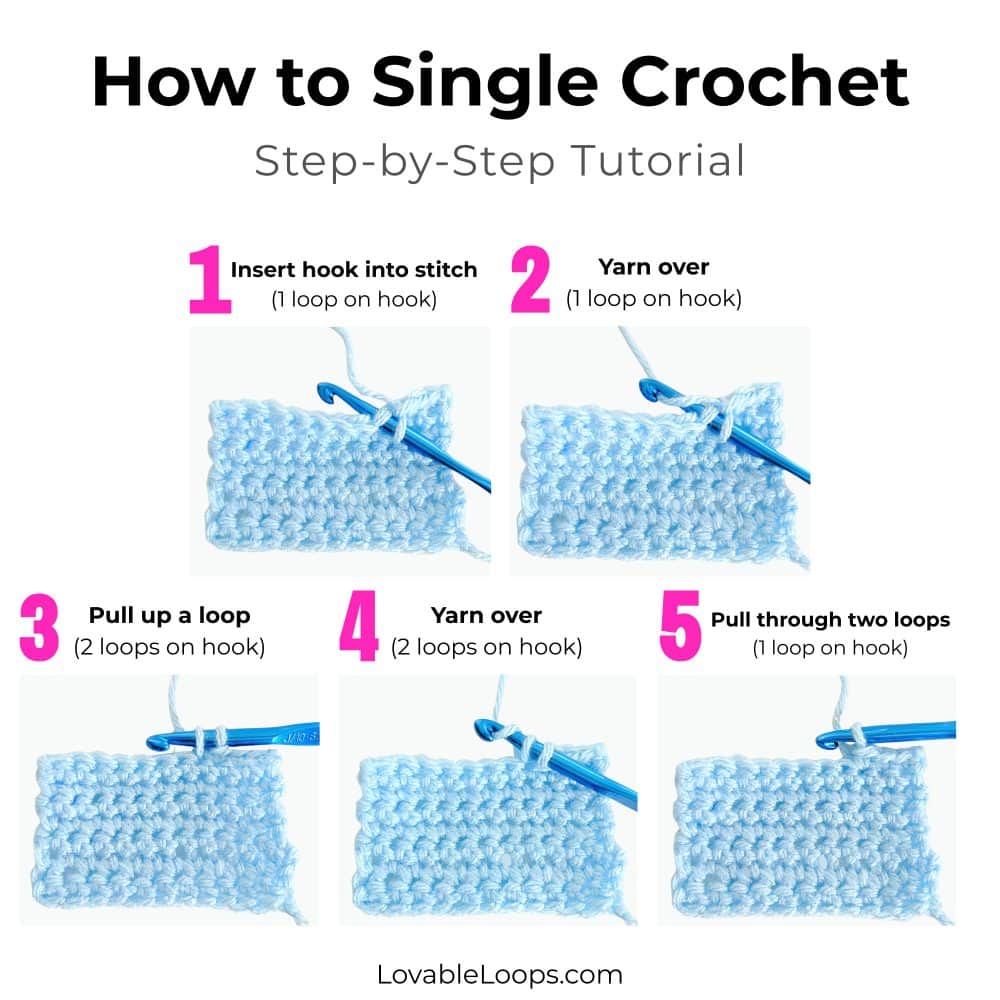
- Insert your hook into the next chain or stitch.
- Yarn over.
- Pull up a loop. You should now have two loops on your hook.
- Yarn over again.
- Pull through both loops on the hook.
You have now completed one single crochet stitch.
Where to insert your hook
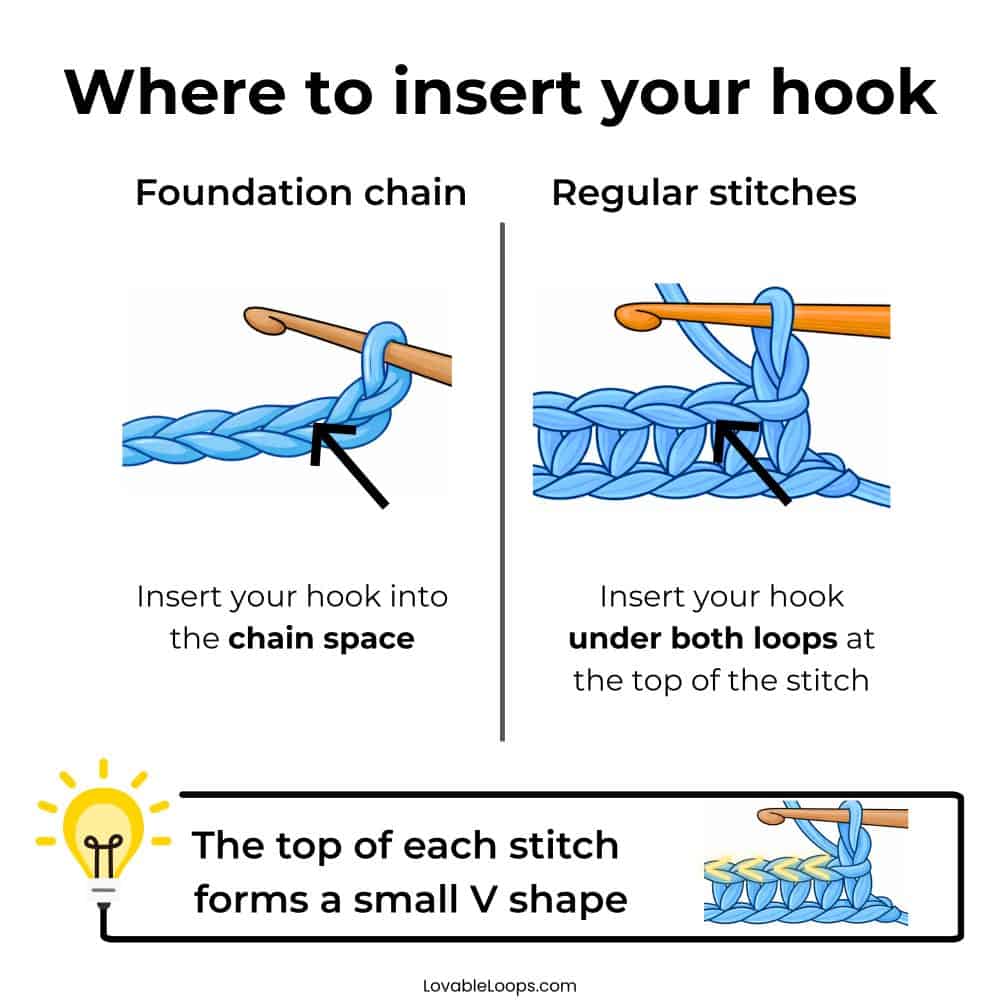
When working into a foundation chain, insert the hook into the chain space.
When working into regular stitches, insert the hook under both loops at the top of the stitch unless the pattern says otherwise.
Turning chain for single crochet
When crocheting in rows, you usually begin each new row with a turning chain.
For single crochet, the turning chain is typically:
Chain 1
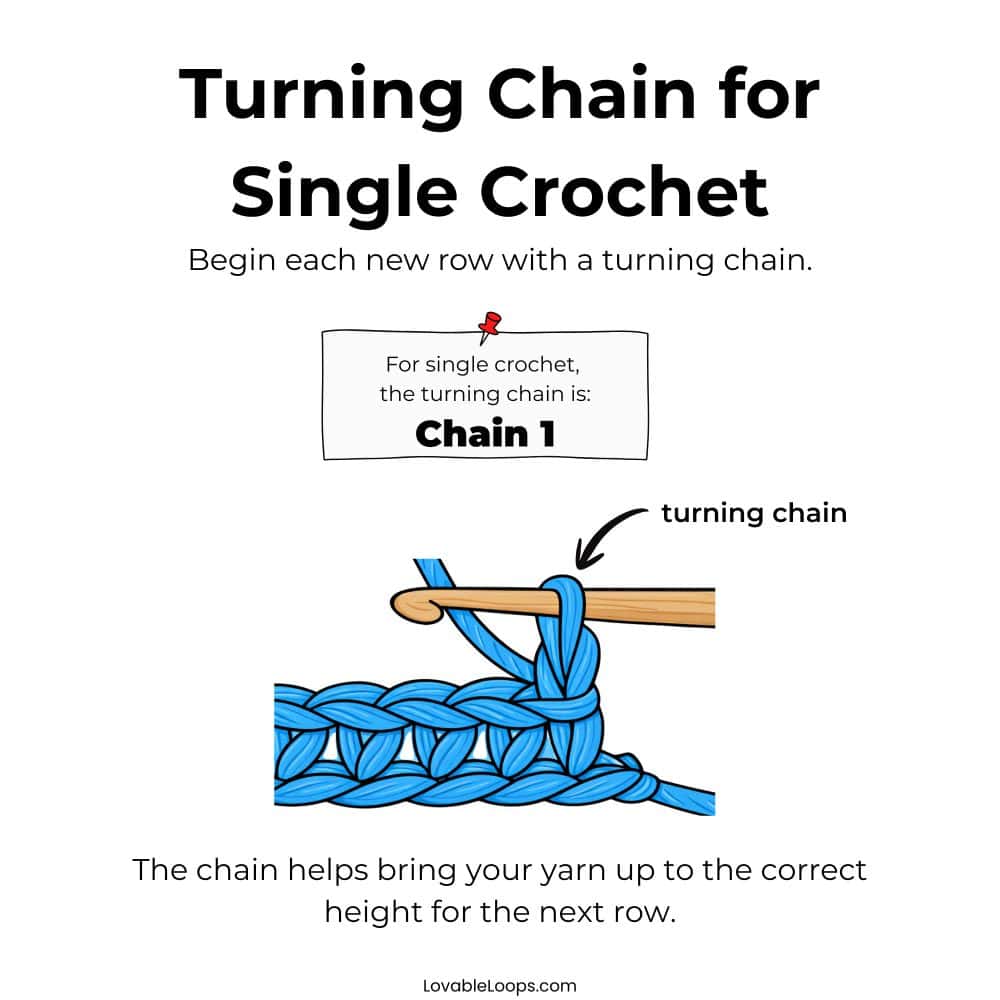
This chain helps bring your yarn up to the correct height for the next row.
Does the turning chain count as a stitch?
In most crochet patterns, the turning chain does not count as a stitch when working single crochet.
However, every designer writes patterns slightly differently, so always check the pattern notes to be sure.
Crocheting in rows vs crocheting in the round
Single crochet can be worked in rows or in the round, depending on the project.
Understanding the difference helps you follow patterns more easily.
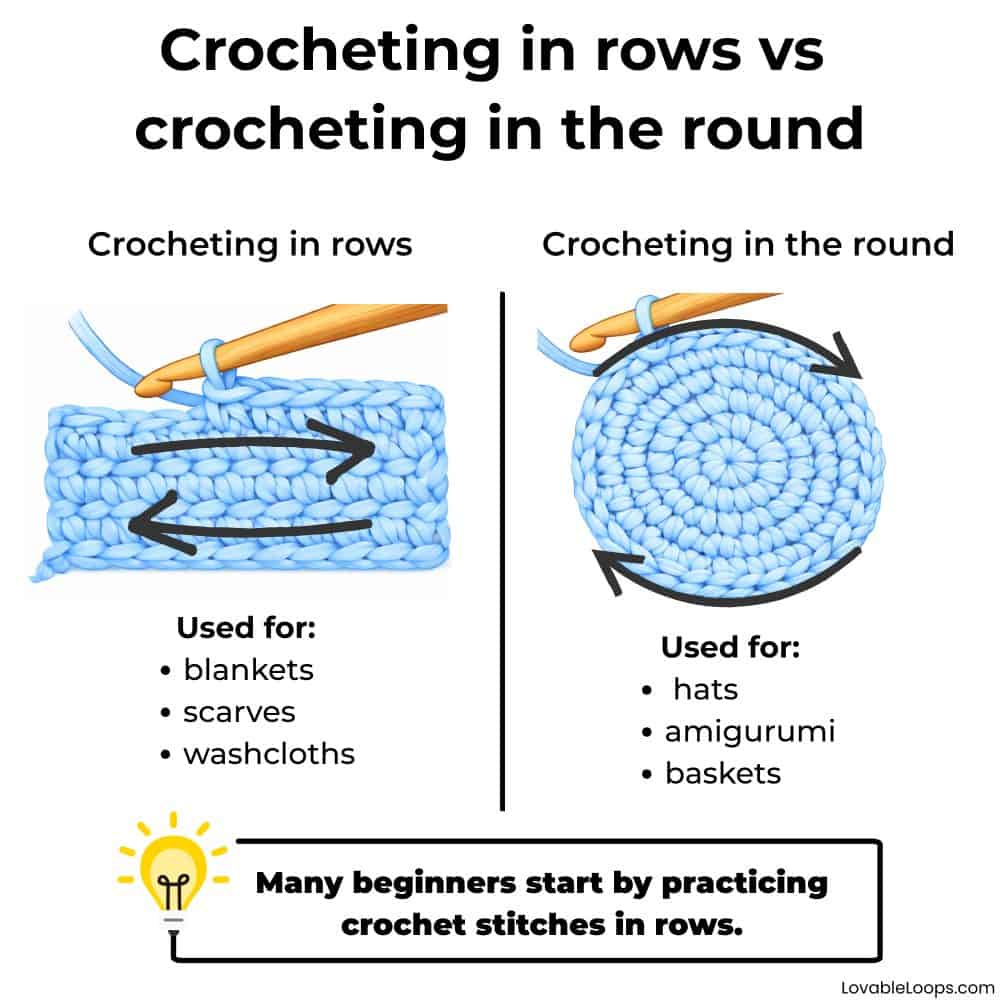
Crocheting in rows
Crocheting in rows means working back and forth across your project.
At the end of each row, you turn your work and crochet across again.
This method is commonly used for:
- blankets
- scarves
- dishcloths
- panels for garments
Rows create a flat rectangular piece of fabric with a right side and a wrong side.
Crocheting in the round
Crocheting in the round means working continuously in circles instead of turning your work.
This technique is commonly used for:
- hats
- amigurumi
- baskets
- sleeves
- granny squares
Rounds can be worked in joined rounds or continuous spirals, depending on the pattern.
Why this matters for single crochet
Single crochet can be used both in rows and in the round. The stitch may look slightly different depending on which method you use, but the basic technique stays the same.
Many beginners start by practicing stitches in rows before moving on to projects worked in the round.
How to single crochet in rows
The easiest way to practice single crochet is by making a simple swatch.
- Chain 11.
- Insert your hook into the second chain from the hook.
- Single crochet in each chain across.
- Chain 1 and turn your work.
- Single crochet in each stitch across the row.
Repeat Step 4 and Step 5 to continue building rows.
How to single crochet in the round
Single crochet can also be worked in circular patterns.
Many projects start with either:
- a magic ring, or
- a chain ring
Stitches are worked into the center of the ring, and each round builds outward to create a circle.
This technique is commonly used when making crochet hats or amigurumi.
Practice swatch for beginners
Practicing with a small swatch is one of the easiest ways to learn how to single crochet. It allows you to focus on the stitch without worrying about shaping or counting complex patterns.
Chain 11.
Row 1: Single crochet in the second chain from the hook and in each chain across. (10 stitches)
Row 2: Chain 1, turn, single crochet in each stitch across.
Repeat Row 2 until your swatch reaches your desired length.
What single crochet looks like
Single crochet stitches create a short, compact row of stitches.
The top of each stitch forms a small V shape, and the rows sit closely together.
Because the stitch is short, the fabric is thicker and firmer than taller stitches like double crochet.
Single crochet increase and decrease
You can change the shape of a crochet project by increasing or decreasing single crochet stitches.
Single crochet increase means working 2 single crochet stitches into 1 stitch. This adds stitches and makes your project wider.
Single crochet decrease means working stitches together to turn 2 stitches into 1. This removes stitches and makes your project narrower.
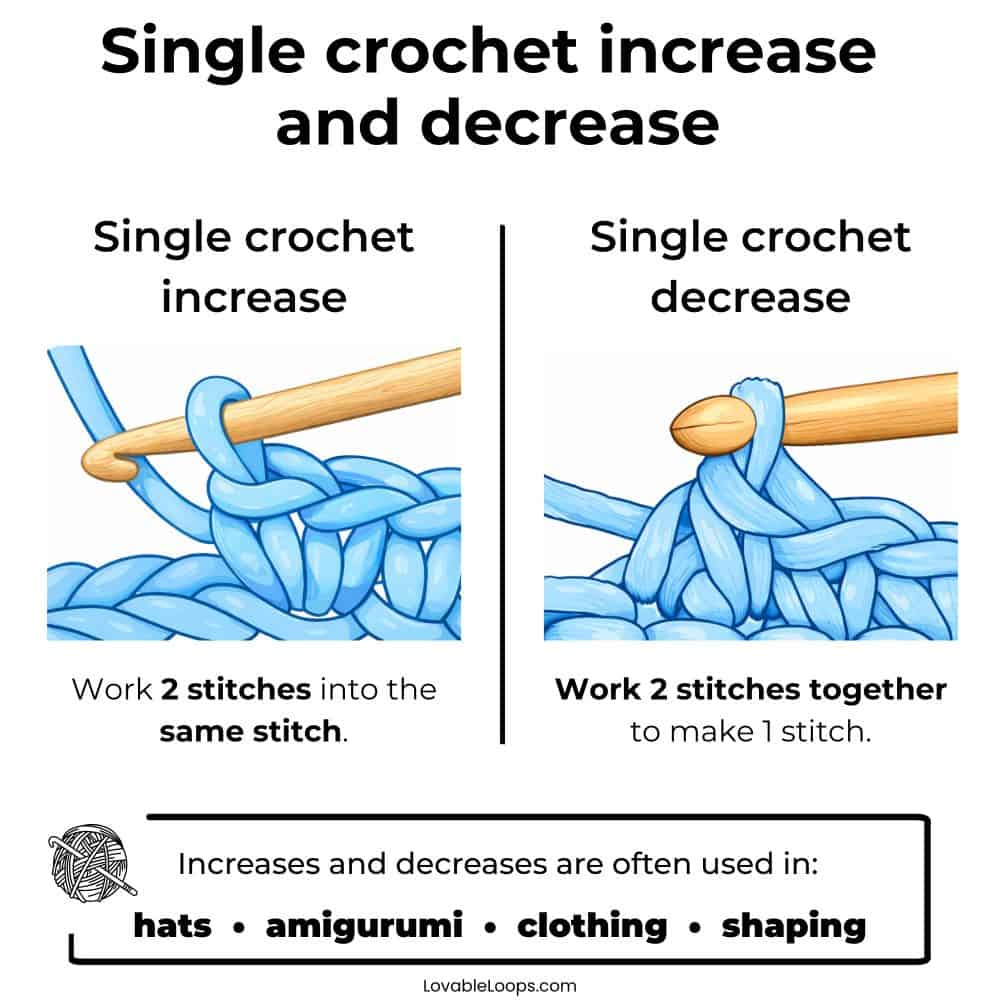
Increases and decreases are often used in:
- hats
- amigurumi
- sleeves
- shaping
Common single crochet mistakes
Many beginners experience small issues when learning this stitch.
Common mistakes include:
- Missing the last stitch of the row – this can cause your rows to slowly become smaller
- Adding extra stitches – working into the turning chain by mistake can increase your stitch count
- Working into the wrong part of the stitch – make sure you insert your hook under both loops unless the pattern says otherwise.
- Crocheting too tightly – tight tension can make it difficult to insert your hook
Tips for beginners
These tips can make learning single crochet easier.
- Use light-colored yarn so your stitches are easier to see.
- Choose smooth yarn instead of fuzzy yarn when practicing.
- Count your stitches at the end of each row.
- Place a stitch marker in the first or last stitch if needed.
- Practice slowly until the movement becomes comfortable.
Single crochet stitch variations
Once you understand the basic single crochet stitch, you can try several variations that add texture or shaping.
Popular variations include:
- single crochet increase
- single crochet decrease
- back loop only single crochet
- front loop only single crochet
- spike stitch
- reverse single crochet (crab stitch)
These variations are often used to create interesting textures or decorative edges.
Patterns that use single crochet
Single crochet is used in many beginner-friendly crochet patterns.
Once you feel comfortable with the stitch, try using it in simple projects like: crochet washcloths, crochet scarves, crochet hats, crochet blankets, and crochet baskets.
Once you feel comfortable with the stitch, browse my free crochet patterns to find beginner projects you can start right away.
Frequently asked questions
Still have questions about the single crochet stitch? These answers cover some of the most common beginner questions.
What does sc mean in crochet?
In crochet patterns, sc stands for single crochet.
Is single crochet good for beginners?
Yes. Single crochet is one of the easiest crochet stitches to learn and is often taught first.
Where do I insert my hook for single crochet?
Insert your hook under both loops at the top of the stitch unless the pattern instructs you to work in the front or back loop only.
Does chain 1 count as a stitch in single crochet?
In most patterns, the chain 1 turning chain does not count as a stitch.
Why are my rows getting smaller?
You may be missing the last stitch of each row. Counting your stitches can help prevent this.
Learn more basic crochet stitches
These basic crochet stitch tutorials will help you learn the essential crochet stitches step by step, from the foundation chain to taller stitches like double crochet and treble crochet.
- How to chain
- How to slip stitch
- How to single crochet
- How to half double crochet
- How to double crochet
- How to treble crochet
Let’s connect!
I’d love to see what you’re making! Share your finished project and follow along for more free crochet patterns and tutorials.
📌 Don’t forget to pin this pattern for later!
Happy crocheting! 🧶
— Melissa